

 Academic Frontier
IF 26.8! Zwitterionic brush-grafted interface bio-lubricant evades complement C3-mediated macrophage phagocytosis for osteoarthritis treatment
QQ Academic Group: 1092348845
Detailed
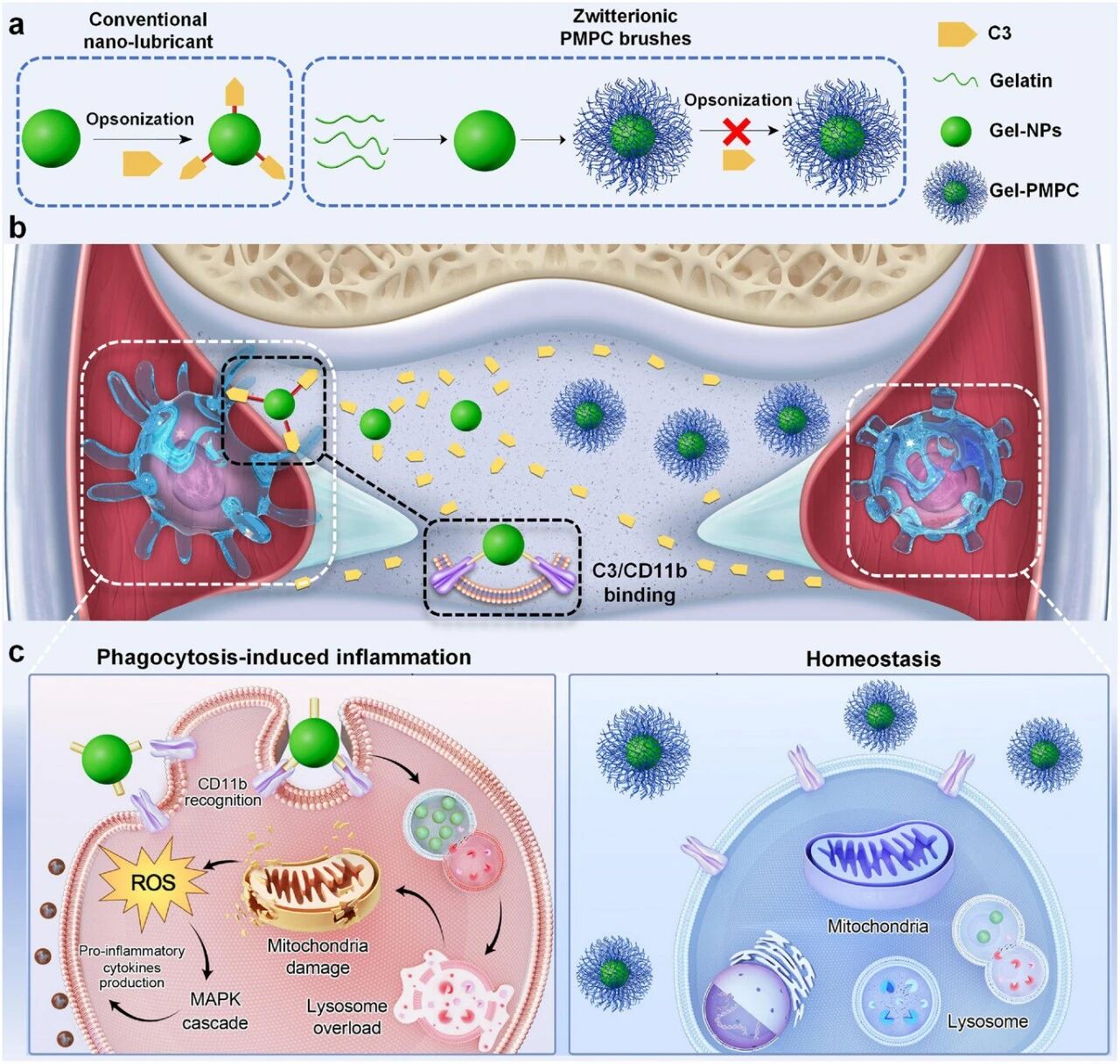
The use of biolubricants is a promising treatment for osteoarthritis (OA), especially if they can both control symptoms and halt disease progression. However, the clearance of these biolubricants mediated by synovial macrophages can lead to reduced therapeutic efficiency and adverse inflammatory responses. Here, it is shown that this process is primarily mediated by the specific binding of complement C3 (on nanoparticles) and CD11b (on macrophages). More importantly, through a systematic evaluation of various interface modifications,A macrophage-evading nanoparticle strategy was proposed, which not only minimizes friction but also largely suppresses the adsorption of C3. It involves using a zwitterionic poly(2-methacryloyloxyethyl phosphorylcholine) (PMPC) brush layer grafted from a crosslinked gelatin core. In vitro studies have shown that this nanoparticle lubricant can evade macrophage phagocytosis and further prevent pro-inflammatory M1 polarization and the subsequent harmful release of cytokines. In vivo studies indicate thatThe PMPC-coated layer designed in this study can effectively reduce synovial inflammation, alleviate OA-related pain, and protect cartilage from degeneration, thereby preventing OA progression. These findings clarify the key role of complement C3-mediated macrophage recognition in nanoparticle clearance and provide a promising nanoparticle design strategy for restoring joint lubrication.
Original link
Pub Date : 2025-04-30
DOI: 10.1002/adma.202501137
Chuandong Cai, Mingwei Wang, Luman Wang, Jiangtao Guo, Lipeng Wang, Yingkai Zhang, Guohao Wu, Bingxuan Hua, Martien A. Cohen Stuart, Xuhong Guo, Lu Cao, Zuoqin Yan
Advanced Materials ( IF 26.8 )
- Previous: IF 15.6! Single-layer
- Next: Bioactive Materials|离子


