

 Academic Frontier
Biomaterials | Lymph Node-Targeted Nanomedicine for Cancer Immunotherapy
QQ Academic Group: 1092348845
Detailed
Lymph nodes (LNs) are central hubs of adaptive immunity, responsible for T cell activation and long-term immune surveillance, making them major targets for cancer immunotherapy. However, their inherent immunosuppressive microenvironment and the systemic distribution of conventional treatments often limit antitumor efficacy and increase off-target toxicity. LN-targeted nanomedicines enhance antigen presentation, activate T cells within the LNs, and reverse immunosuppression, while minimizing systemic exposure.A promising strategy has been proposed to overcome these limitations. Key strategies for LN targeting include: (1) passive targeting, optimizing the size, charge, and deformability of nanoparticles to favor lymphatic absorption and LN accumulation; (2) active targeting, using ligand-receptor interactions to selectively bind to LN-resident immune cells or lymphatic structures; and (3) controlled drug release.Enabling drugs to be delivered continuously and locally enhances immunomodulatory effects. This review explores the immunosuppressive LN microenvironment and the obstacles to effective nanomedicine delivery, followed by a comprehensive overview of LN-targeted nanomedicine design, highlighting strategies for functional optimization. By integrating mechanistic insights and design principles, we outline the future direction for developing LN-targeted immunotherapies that enhance anti-tumor immunity, promote durable memory responses, and improve clinical translatability.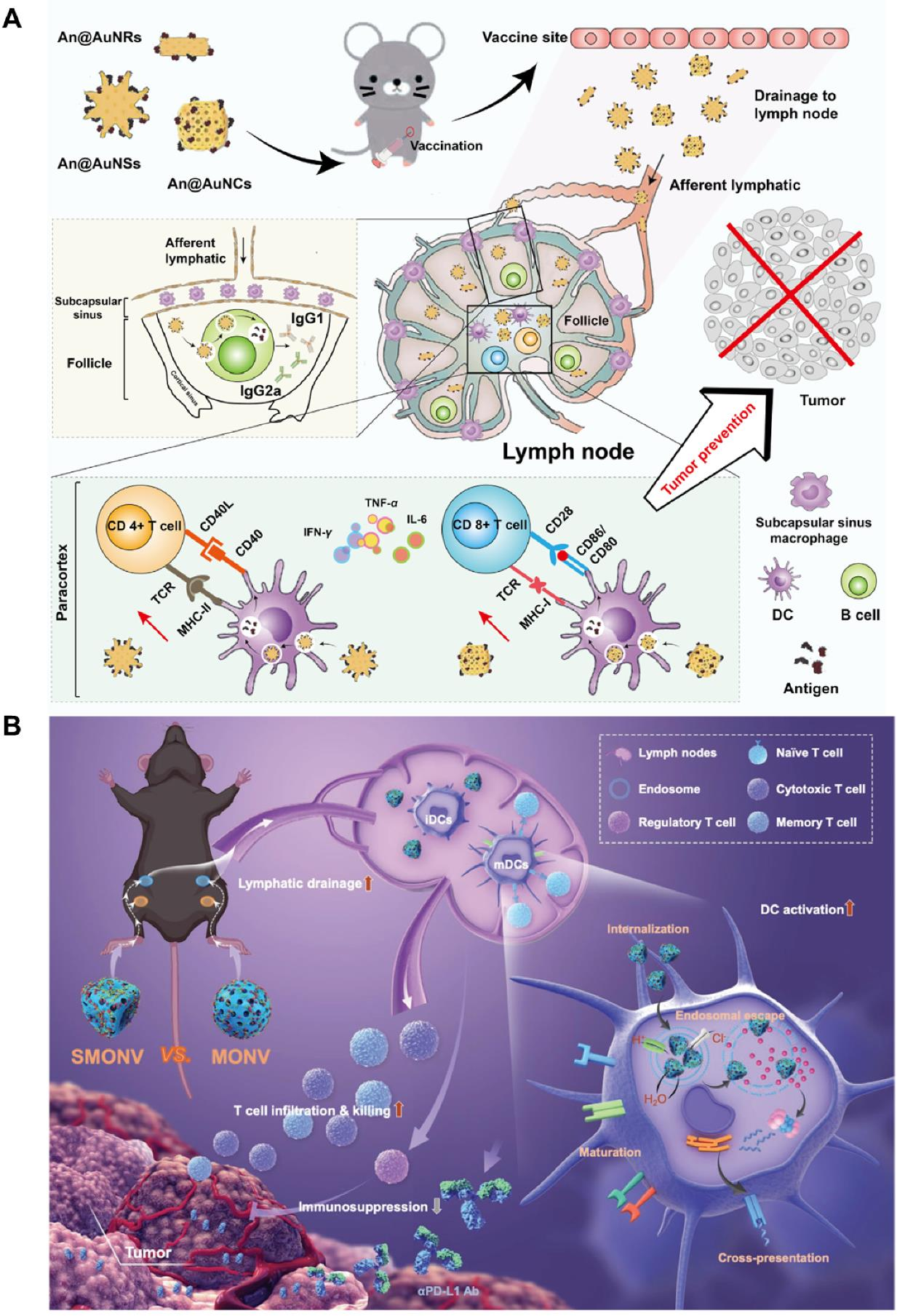
Reference News:
https://www.x-mol.com/paper/1970562591195164672/t?adv
- Previous: Advanced Materials | T
- Next: Bioactive Materials|离子


