

 Academic Frontier
Journal of Controlled Release | Dual-network hyaluronic acid hydrogel combining FGF21 and layered black phosphorus nanosheets for anti-ferroptosis therapy in spinal cord injury
QQ Academic Group: 1092348845
Detailed
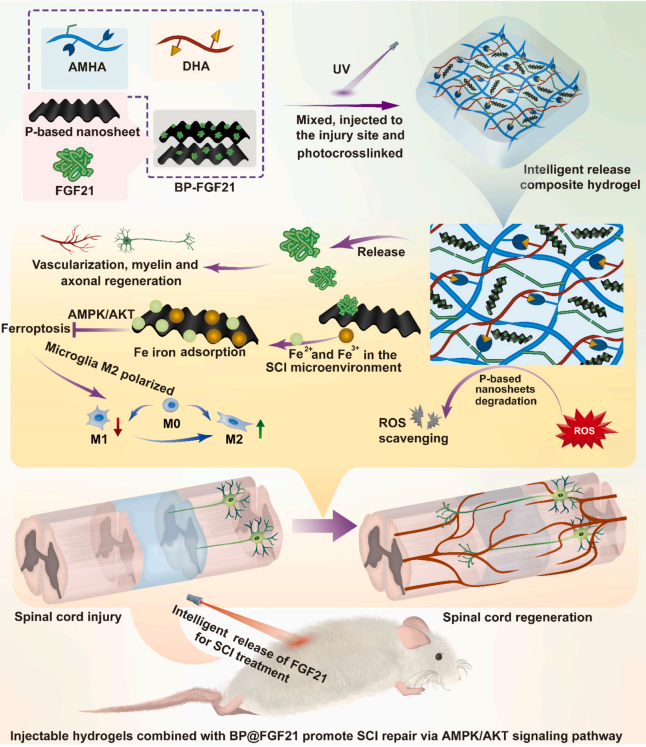
Oxidative stress caused by iron death can trigger mitochondrial damage in spinal cord injury (SCI), impair residual neuronal function, and drive microglial M1 polarization. Regulating neuronal mitochondrial function is an urgent issue in the field of tissue engineering. To address this, an injectable double-network hyaluronic acid/black phosphorus (BP)/fibroblast growth factor 21 (FGF21) composite hydrogel (ADBF) was investigated, and the successful application of this functional hydrogel in spinal cord injury repair was demonstrated. The two-dimensional BP matrix enables the high-efficiency loading of large molecules such as FGF21.Sustained release of FGF21 by ADBF can reduce neuronal oxidative stress and alleviate neurodegenerative diseases. Subsequently, exposure of BP nanosheet surfaces enhances cation adsorption (such as iron ions), thereby inhibiting iron shedding. In a mouse spinal cord injury model, behavioral, electrophysiological, and immunohistochemical studies showed that the composite ADBF hydrogel effectively promoted functional recovery by enhancing myelination, accelerating axon regeneration, inhibiting neuronal ferroptosis, and modulating the immune microenvironment for nerve regeneration.Mechanistically, ADBF restores mitochondrial function through the AMPK/AKT signaling axis, thereby promoting M2 polarization of microglia and reducing ferroptosis. The strategy of integrating BP/FGF21 nanosheets into injectable conductive hydrogels provides new insights for designing advanced biomaterials for anti-ferroptosis therapy in spinal cord injury repair.
References:
DOI: 10.1016/j.jconrel.2025.114157
- Previous: Revolution in Nanomedi
- Next: Bioactive Materials|离子


