已传文件:photo/1769738012.png
Early-onset preeclampsia (EOPE) is associated with excessive apoptosis and inflammation, but the mechanistic link between these processes remains unclear. This study reports that pro-apoptotic proteins are elevated in the circulation of EOPE patients during early pregnancy, alongside CASP3 activation and GSDME cleavage in EOPE placentas. Using various trophoblast cell lines, we demonstrate that trophoblast cells with high GSDME expression switch from apoptosis to CASP3-dependent pyroptosis, driving inflammation. Notably, the stressed trophoblast cells further promote pro-inflammatory macrophage polarization within placental villous organoids, establishing a feedback loop that enhances trophoblast pyroptosis and inflammation in trophoblast-macrophage cocultures. In vivo, CASP3-GSDME-mediated trophoblast pyroptosis induces systemic inflammation in wild-type pregnant mice but not in Gsdme−/− mice. Screening of EOPE preventive drugs revealed that vitamin D inhibits GSDME activation and pyroptosis in trophoblasts. Our collective findings establish CASP3–GSDME-mediated slow pyroptosis as the mechanistic link between apoptosis and inflammation in EOPE.
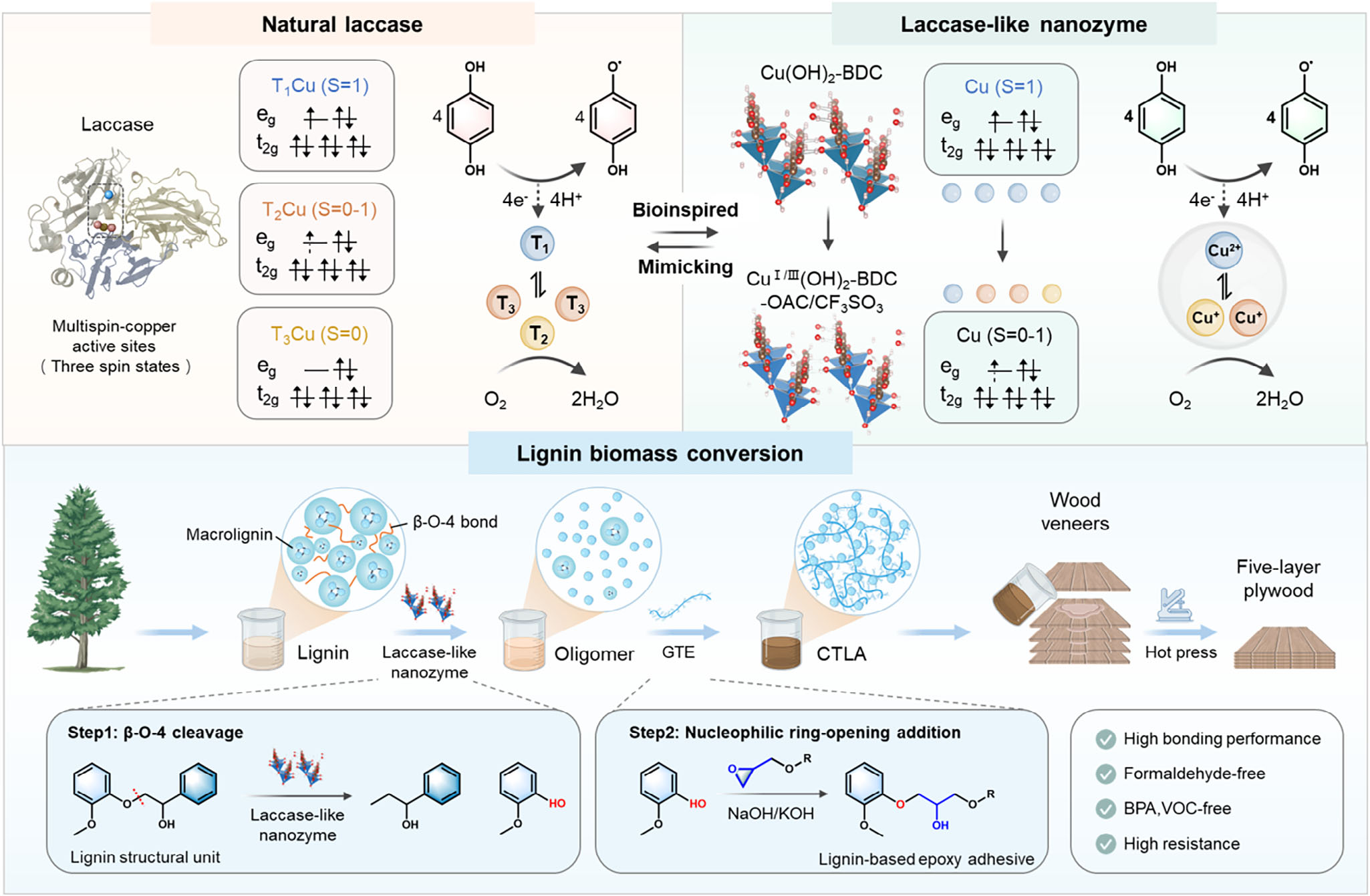
This article introduces a groundbreaking study: by using spin-engineered two-dimensional copper-based metal-organic framework nanoenzymes, researchers successfully overcame the common trade-off between activity and selectivity in traditional catalysts during lignin conversion, achieving a new sustainable production route from lignin biomass to high-performance eco-friendly adhesives.
Lignin, as the main component of plant cell walls, is the most abundant renewable source of aromatic polymers in nature. Its structure is rich in reactive aromatic groups, making it an ideal raw material for developing bio-based green adhesives. However, traditional chemical degradation methods often rely on harsh conditions, leading to high energy consumption and poor selectivity. Although natural laccases and other biocatalysts can selectively break key chemical bonds in lignin under mild conditions, they face challenges in practical applications, such as poor stability, high cost, and difficulty in recovery. To address this, the research team, inspired by the spin-state cooperative mechanism of the multicopper active centers in natural laccases, proposed an innovative rational design strategy for nanozymes.
The core of the research lies in precisely regulating the spin states of copper sites in two-dimensional copper-based MOF nanozymes to mimic and surpass the catalytic functions of natural laccase. The team synthesized ultrathin two-dimensional COHB nanosheets using a sacrificial template method, and through hydrogen peroxide oxidation, ascorbic acid reduction, and ligand exchange with acetate and trifluoromethanesulfonate, successfully prepared a series of derivative nanozymes with different copper spin states. Comprehensive analyses using X-ray photoelectron spectroscopy and variable-temperature magnetic susceptibility indicate that these treatment strategies effectively regulate the electronic structures and spin states of the copper centers, with materials optimized by combined ascorbic acid reduction and acetate ligand exchange exhibiting unique electronic configurations.
 References:
DOI: 10.1002/adma.202517928