已传文件:photo/1769912431.png
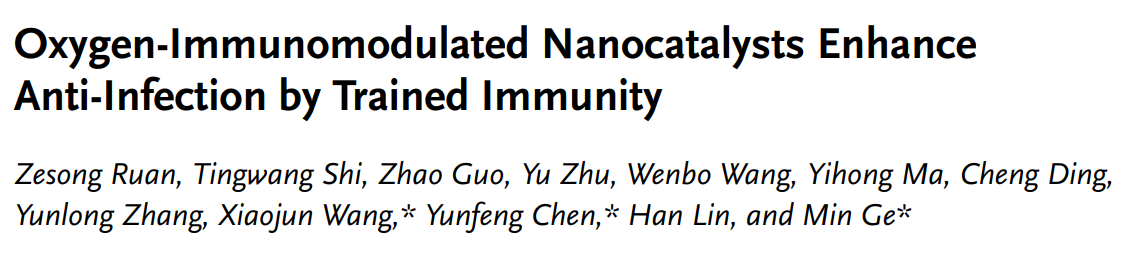
The biofilm infection microenvironment (BIM) in orthopedic implant-associated infections forms a robust barrier that resists antimicrobials and evades the host immune system, but there is currently limited effective targeted therapy for BIM properties. In this paper, an emerging nanocatalytic immunotherapy strategy based on microambient oxygen regulation is proposed. It has been reported that light-activated oxygen immunomodulatory factor (LAOIR) can effectively target and destroy biofilms by generating haplooxygen (¹O₂) in the early stages of phototherapy. LAOIR-induced hypoxic microenvironment prolongs neutrophil lifespan and mitigates immune tolerance caused by lipocholic acid (LTA) caused by killed bacteria. As the biofilm disintegrates and oxygen is restored, neutrophil "immune switches" are triggered, and in immune training, such as reticular sleep and phagocytosis, neutrophils exhibit enhanced bactericidal activity. At the same time, LAOIR therapy mediates the pro-inflammatory cytokines IL-6 and IL-1β and chemokines CCR2 and CXCR2 that are elevated in neutrophil expression, promoting immune recruitment, resulting in a more effective therapeutic effect than vancomycin. In vitro and in vivo experiments have demonstrated that LAOIR is superior to clinical antibiotics in the treatment of bacterial infections, directly supporting the application of oxygen-modulated immune response strategies in orthopedic implant therapy.
The biofilm infection microenvironment formed in orthopedic implant-related infections constitutes a formidable barrier against antimicrobial drugs and enables evasion of the host immune system. Currently, there are very few effective targeted therapeutic strategies against its characteristics. Addressing this clinical challenge, a study published in Advanced Functional Materials proposed an emerging nano-catalytic immunotherapy strategy based on oxygen regulation in the microenvironment.
The study designed a light-activated oxygen immunomodulator based on two-dimensional germanene. This material has a suitable photoexcitation bandgap and excellent photocatalytic properties. In the early stages of treatment, it can catalyze the conversion of oxygen into reactive oxygen species such as singlet oxygen under light irradiation, effectively disrupting biofilm structures and killing bacteria. Meanwhile, the catalytic process consumes oxygen, locally creating and maintaining a hypoxic microenvironment, providing an opportunity to explore the role of hypoxia in immune regulation.
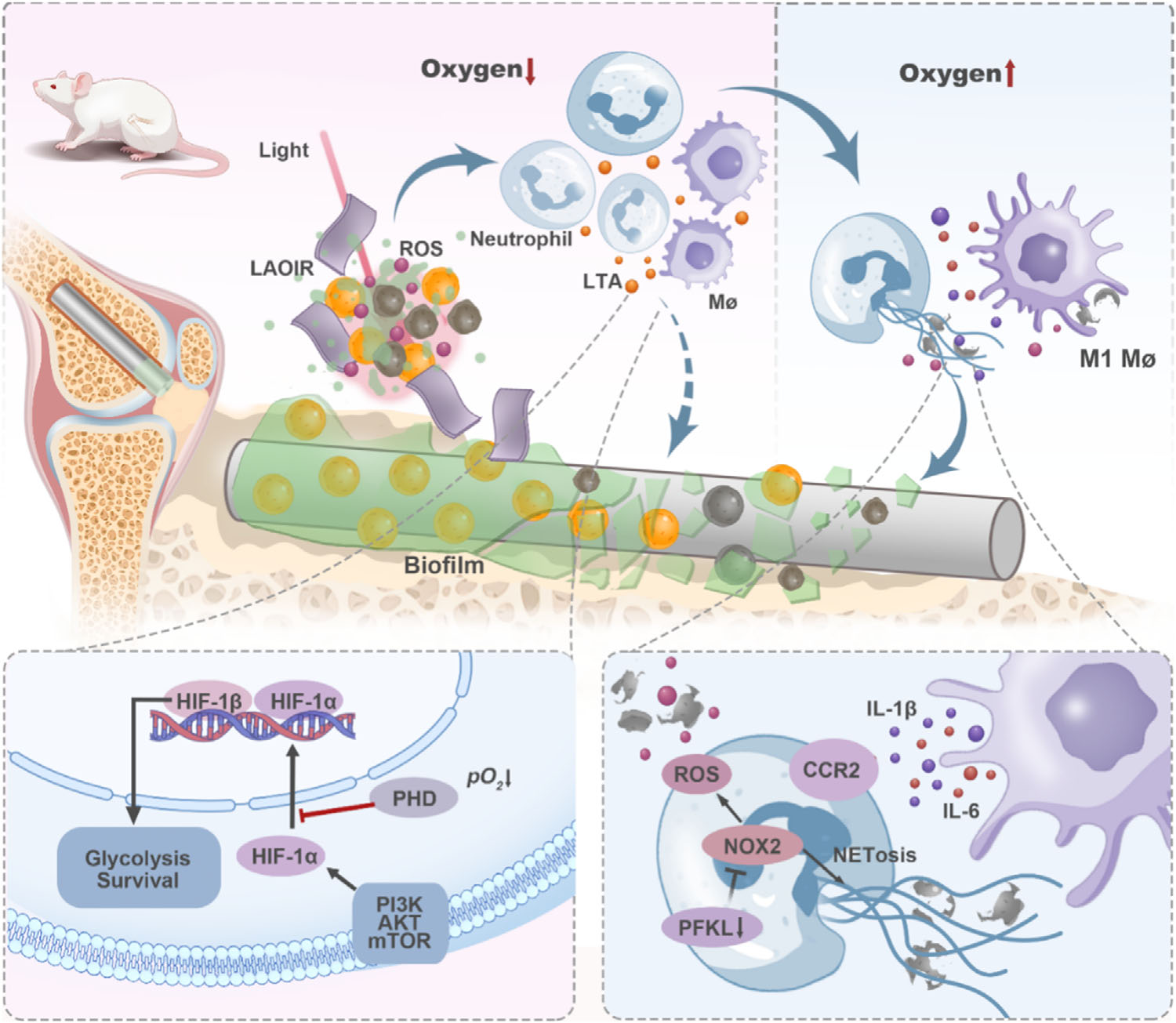
In a mouse model of implant-associated subcutaneous infection and osteomyelitis, LAOIR treatment has demonstrated superior efficacy beyond the clinical antibiotic vancomycin. It not only more effectively clears the bacterial biofilm at the site of infection and significantly reduces the bacterial load in the tissue, but also protects and enhances the immune clearance function of the host through the immunomodulatory mechanisms mentioned above. Histological analysis showed that the LAOIR treatment group had better inflammation control and less bone tissue destruction, which promoted infection healing. The study also confirmed the central role of hypoxia signaling pathway in this immunomodulatory process by adding HIF-1α inhibitors for reverse validation.
This work marks an important advancement in nanocatalytic immunotherapy in the field of addressing drug-resistant biofilm infections. It is no longer limited to simply enhancing bactericidal ability, but cleverly uses the dynamic regulation of local oxygen concentration during treatment to intelligently "manage" the host immune response: first avoid excessive activation and depletion of immune cells in the early stage, and then stimulate their trained and enhanced bactericidal potential in the later stage. This collaborative strategy of temporal air conditioning and control provides a new idea for overcoming the clinical stubborn disease of orthopedic implant infection, and demonstrates the great potential of nanomaterials in regulating the dialogue between the complex biological microenvironment and the host immune system.
References:
DOI: 10.1002/adfm.202509454