已传文件:photo/1793068838.png
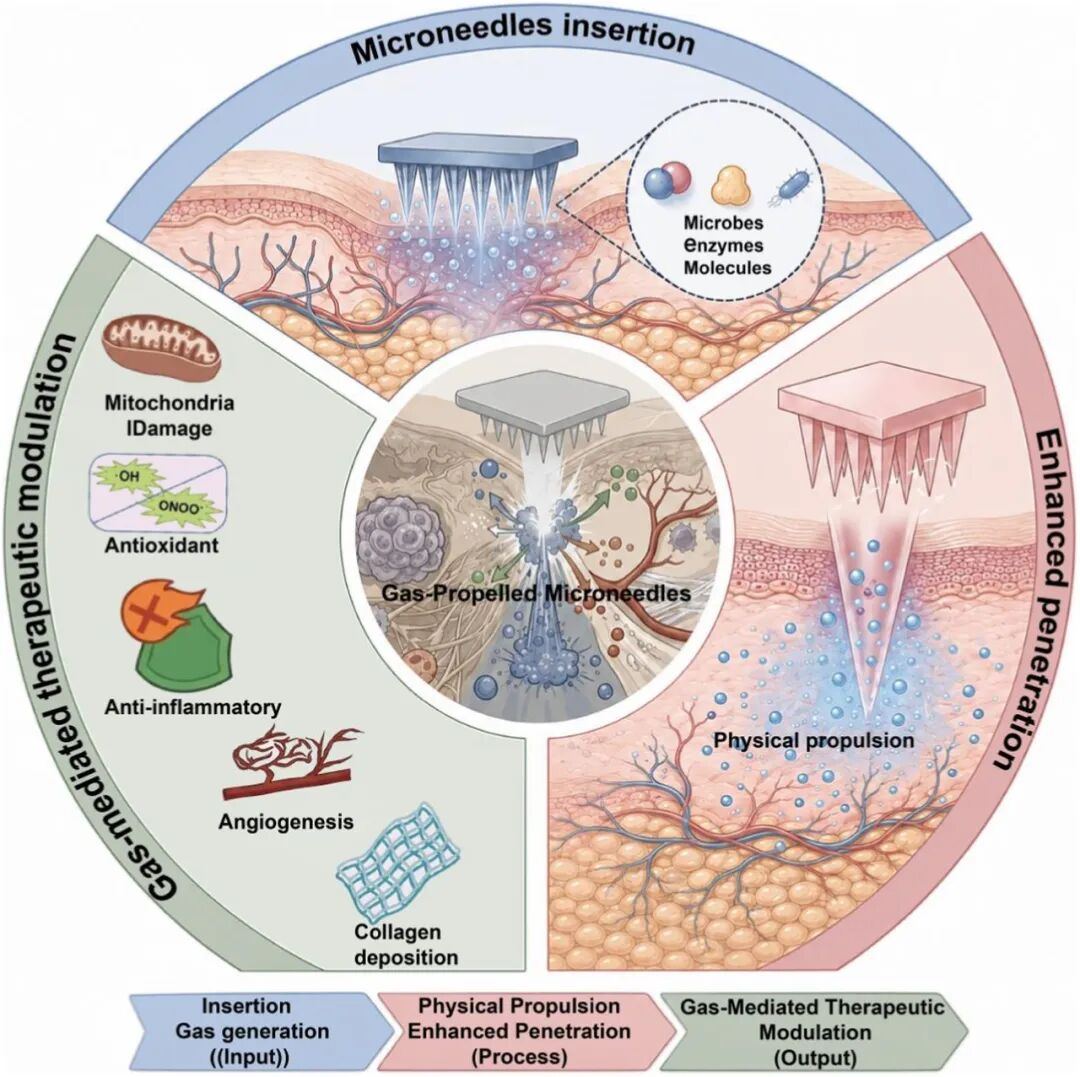
Figure 1
Schematic of a gas-delivery microneedle and its potential therapeutic mechanism.
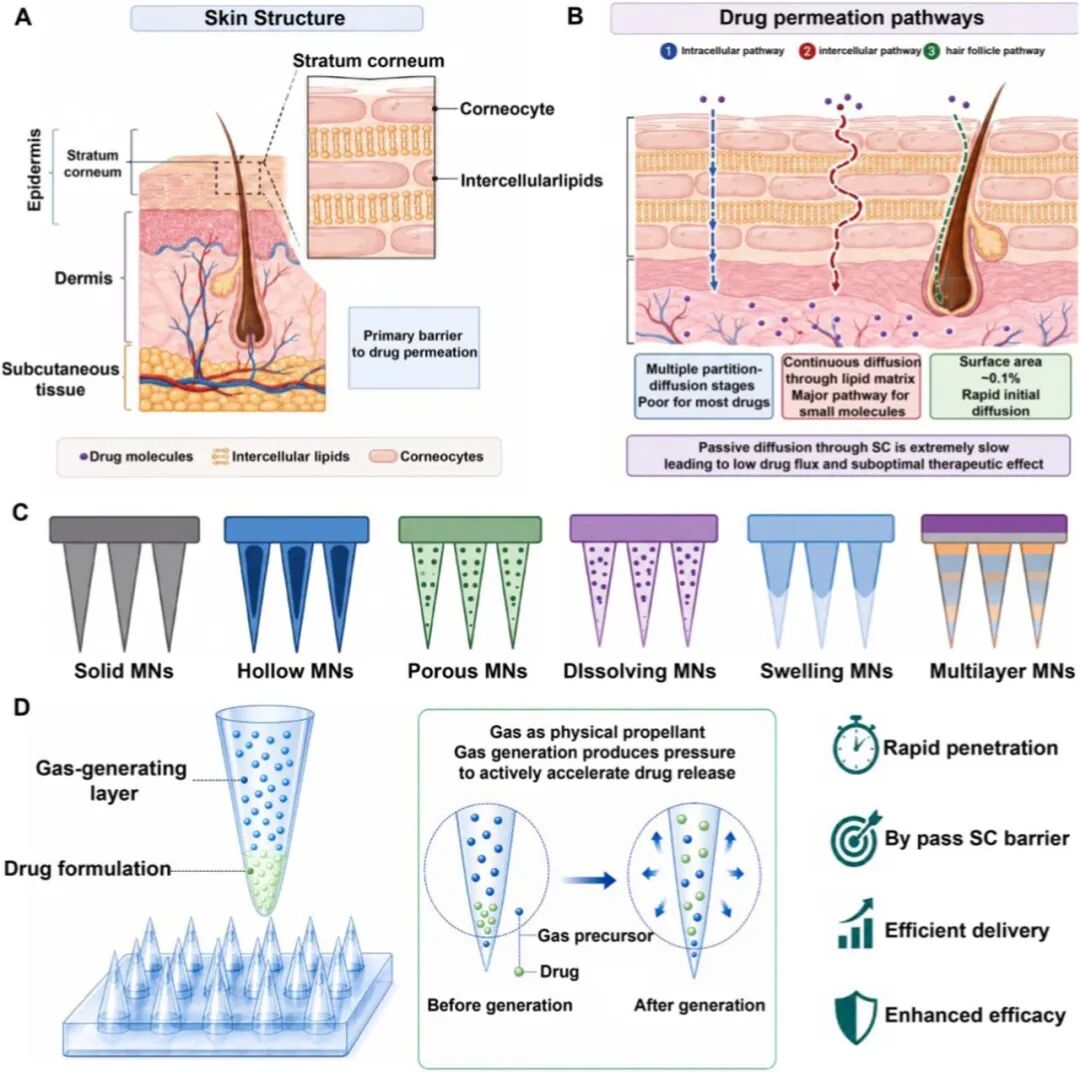
Figure 2
Schematic of skin structure and pneumatic microneedle delivery. (A) Skin structure, showing the stratum corneum (SC), epidermis, dermis, and subcutaneous tissue. The SC is made up of keratinocytes and intercellular lipids and acts as the main barrier to drug penetration. (B) Three main drug penetration pathways in the skin: intracellular, intercellular, and follicular routes. Passive diffusion through the SC is slow and limits drug delivery efficiency. (C) Different types of microneedles, including solid, hollow, porous, dissolving, swellable, and multilayer microneedles. (D) Pneumatic microneedle system. Gas generation in situ produces pressure, actively accelerating drug release, enhancing penetration, bypassing the SC barrier, and improving therapeutic effects.
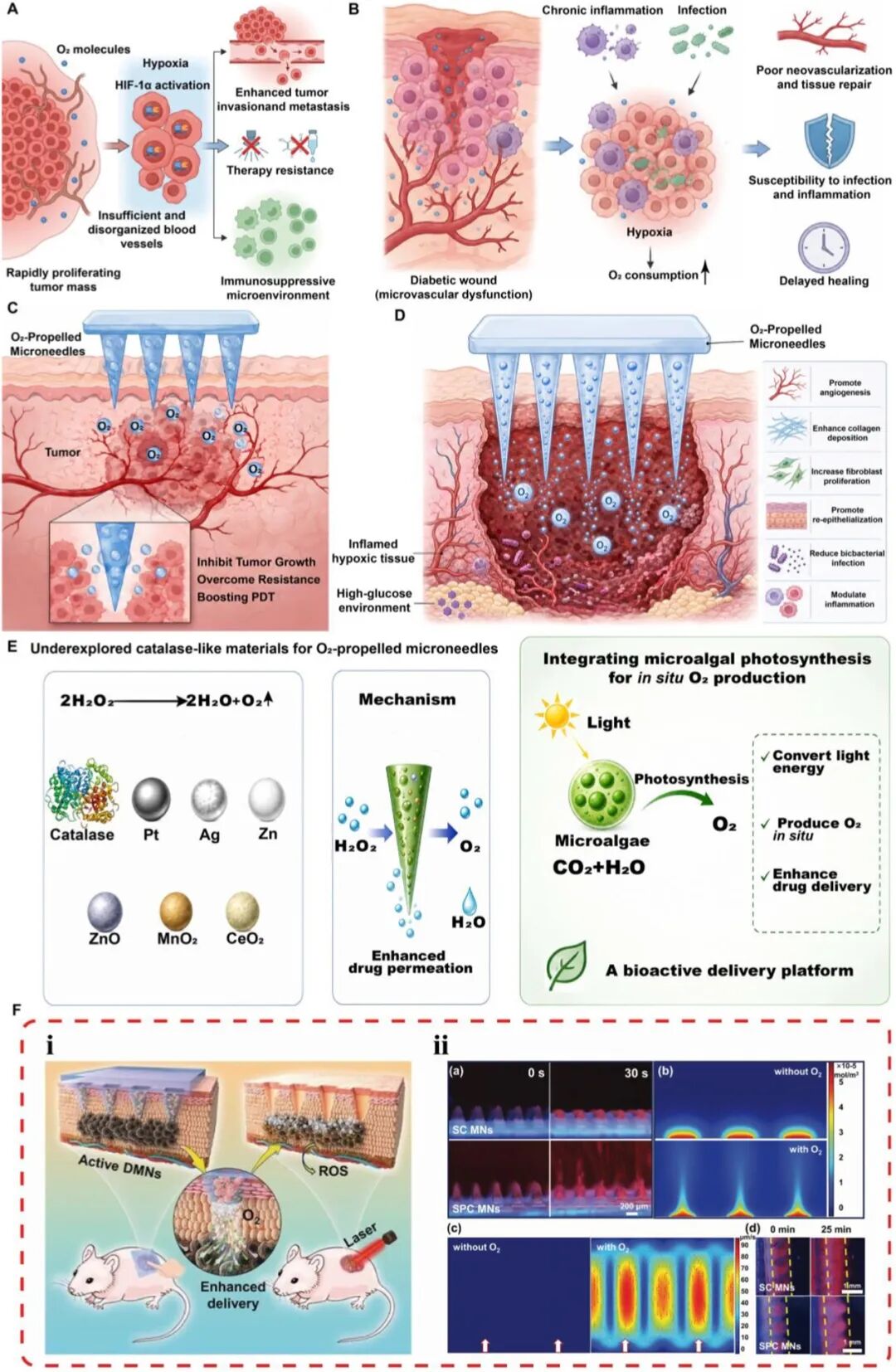
Figure 3
O2-driven microneedles relieve hypoxia in tumors and diabetic wounds. (A) Rapid tumor growth and abnormal blood vessels lead to hypoxia, causing HIF-1α activation, tumor invasion, treatment resistance, and an immunosuppressive microenvironment. (B) Microvascular dysfunction and high blood sugar lead to hypoxia, chronic inflammation, infection, and delayed healing. (C) O2-driven microneedles deliver oxygen to tumors to overcome hypoxia and enhance treatment effects. (D) Microneedle-supplied O2 promotes angiogenesis, collagen deposition, fibroblast proliferation, reduces infection, and accelerates healing. (E) Catalase-like materials decompose H2O2 into O2 to enhance drug penetration. The integration of microalgal photosynthesis enables light-driven in situ O2 generation, forming a bioactive oxygen delivery platform. (F i) An illustration showing Ce6-containing dissolvable microneedles to improve photosensitizer delivery. Sodium carbonate reacts with interstitial fluid to generate gas oxygen bubbles, acting as a pump to drive substances into deep tumor tissue. ii) Evaluation of in vitro effective carrier release performance of Ce6-loaded active sodium carbonate microneedles versus Ce6-loaded passive solid microneedles [18].
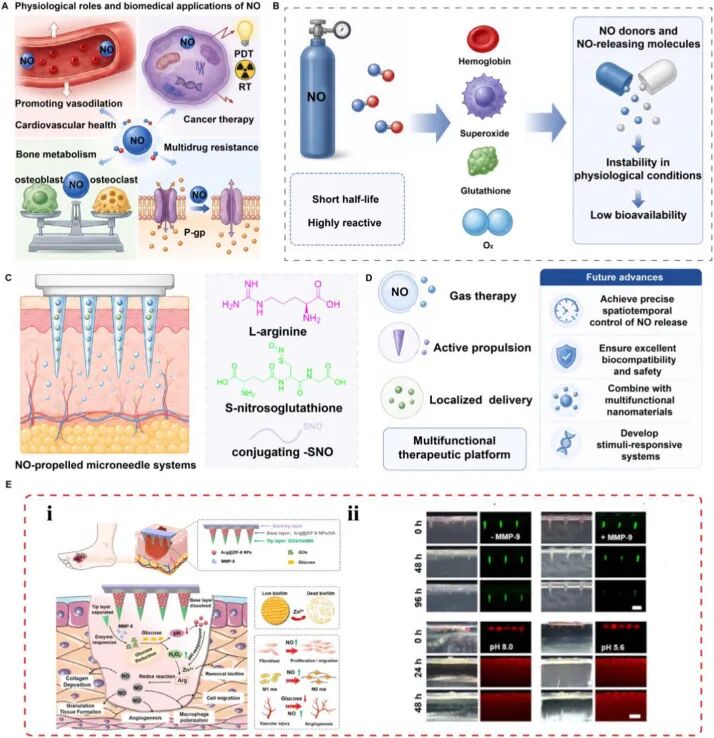
Figure 4
Biomedical applications, limitations, and future prospects of passive microneedle systems. (A) NO, as an important gaseous signaling molecule, is involved in various physiological and therapeutic processes. (B) The direct application of exogenous nitric oxide is limited due to its short half-life and high reactivity with biological substances. (C) Schematic of a passive microneedle system, integrating NO-generating components into the microneedle platform. (D) Future prospects of passive microneedles as multifunctional therapeutic platforms for integrated gas therapy, active delivery, and localized drug delivery. (E) i) Schematic of microenvironment-responsive bilayer G/AZ-MNs designed to promote diabetic wound healing by sustained NO release through glucose reduction. ii) Degradation of microneedle tips in agarose gel (simulated skin) at different time points, with or without MMP-9 [88]. Copyright 2024, Elsevier.
Reference Information
Bioactive Materials (IF 23.6)
Pub Date: 2026-09-03,
DOI: 10.1016/j.bioactmat.2026.08.059