已传文件:photo/1795224775.png
 Frontiers of Biomedical Materials
Renal dysfunction such as acute kidney injury causes retention of systemic metabolites. Protein-bound uremic toxins (PBUTs) are key factors accelerating the progression of kidney disease. Their strong binding to albumin hinders their removal via blood purification in nephropathic patients, resulting in toxin accumulation, which promotes oxidative stress and other complications. These manifestations in turn exacerbate kidney disease progression, forming a vicious cycle. Inspired by the intrinsic “dissociation-transport” mechanism of PBUTs and the antioxidant function of human proximal tubular epithelial cells, a bifunctional antidote was developed to alleviate oxidative stress and eliminate PBUTs. By loading danshensu (DS) onto styrenated β-cyclodextrin cationic microspheres (SDCMs) as a binding competitor, the antidote possesses integrated “dissociation-adsorption” capacity. Notably, danshensu acts as an antioxidant and works synergistically with the adsorbent to reduce PBUT-induced reactive oxygen species, which contributes to mitigating oxidative stress in patients. These functions have been validated in in vitro and in vivo experiments. As a reusable adsorption substrate, SDCMs maintain a regeneration efficiency of over 95% after five adsorption-desorption cycles in albumin solution. In blood perfusion tests using a rabbit model of kidney injury, SDCMs–DS achieved higher clearance rates for representative PBUTs (hippuric acid: 49.79%, p-cresyl sulfate: 38.47%, indoxyl sulfate: 50.67%) compared with the commercial adsorbent HA130 (38.21%, 24.25%, and 41.18%, respectively). Meanwhile, SDCMs–DS can relieve oxidative stress and suppress inflammation and apoptosis. This multi-target protective strategy exhibits promising clinical potential for the management of kidney injury.
This study was published in SusMat under the title “Halting the Progression of Acute Kidney Injury: A Tubular-Inspired Reusable Detoxifier Against Protein-Bound Uremic Toxins and Oxidative Stress”.
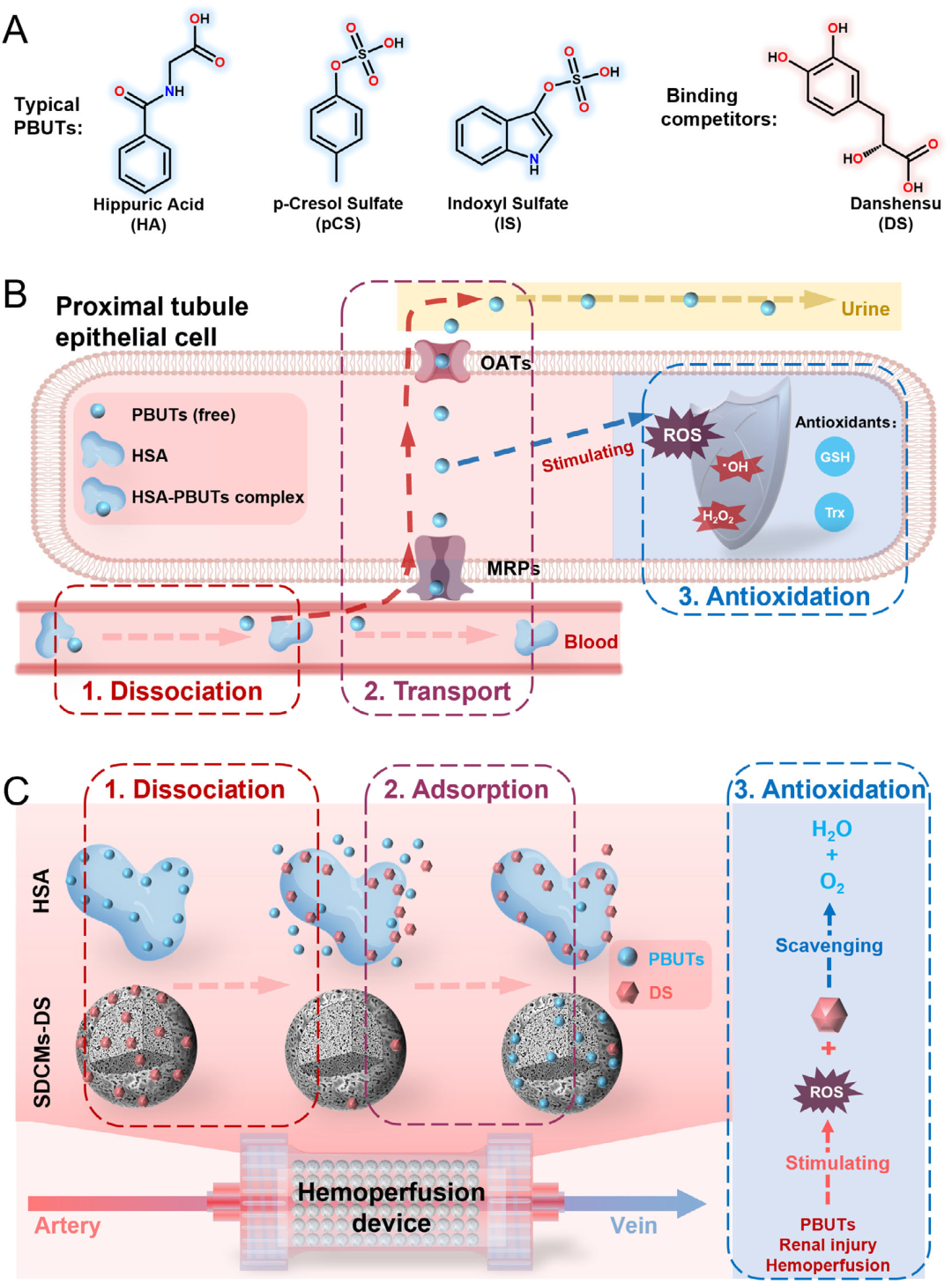
Figure 1
(A) Chemical structures of PBUTs and their binding competitor (danshensu, DS). (B) Schematic illustration of PBUT clearance and oxidative stress alleviation by PTECs. (C) Schematic of the bifunctional detoxifier mimicking PTECs for hemoperfusion: when the adsorbent encounters HSA bound to PBUTs in blood, the loaded DS is released and binds to HSA. This process increases the fraction of free PBUTs in blood, allowing the adjacent adsorbent to capture them. In addition, DS scavenges ROS generated by multiple factors.
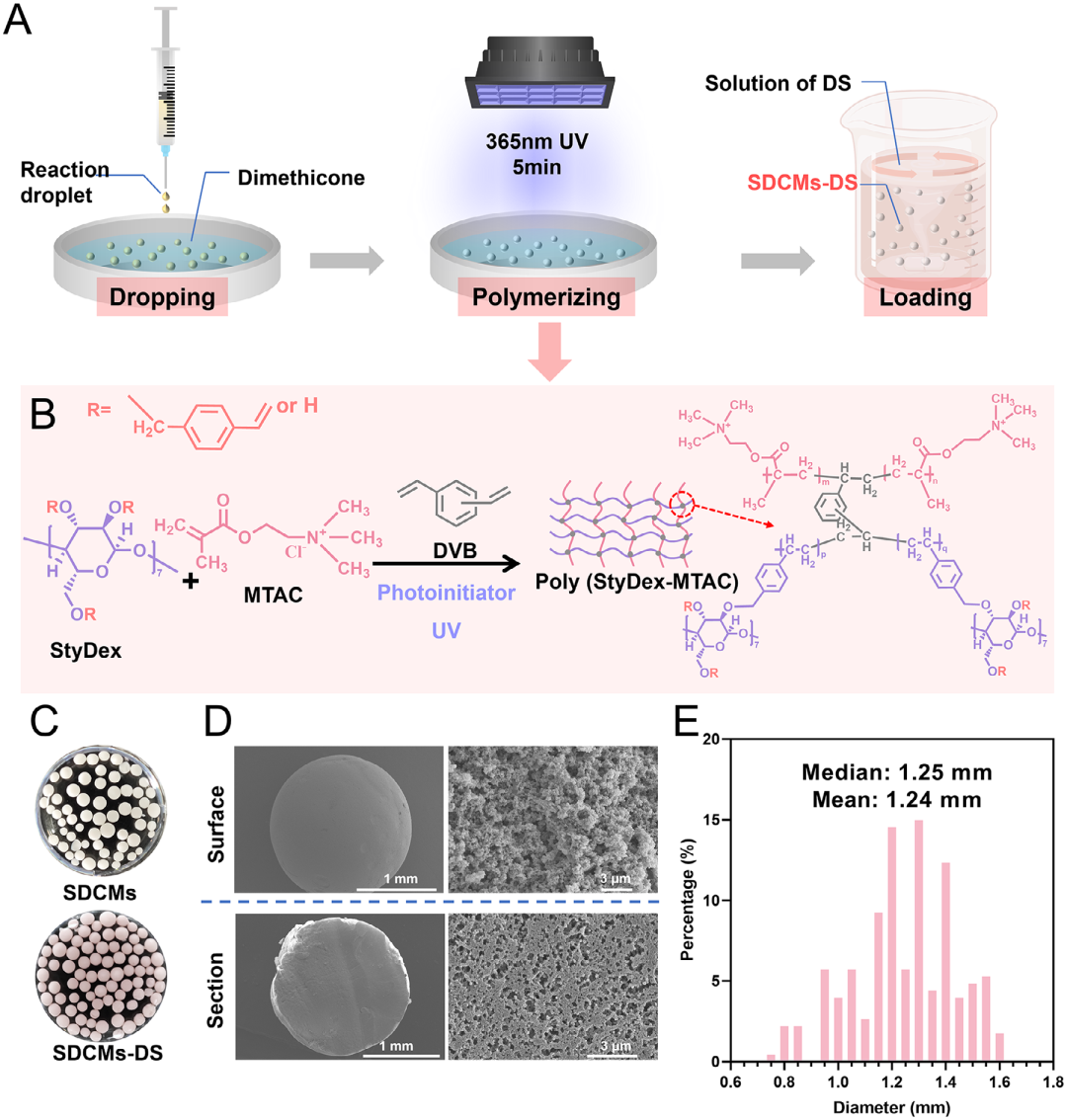
Figure 2
Fabrication scheme and key characterizations of SDCM–DS. (A) Preparation procedure of SDCMs–DS. (B) Reaction equation for the polymerization process. (C) Photographs of SDCMs and SDCMs–DS. (D) SEM image of SDCMs–DS (obtained by scanning electron microscopy). (E) Particle size statistics of SDCMs and SDCMs–DS (analyzed using ImageJ software).
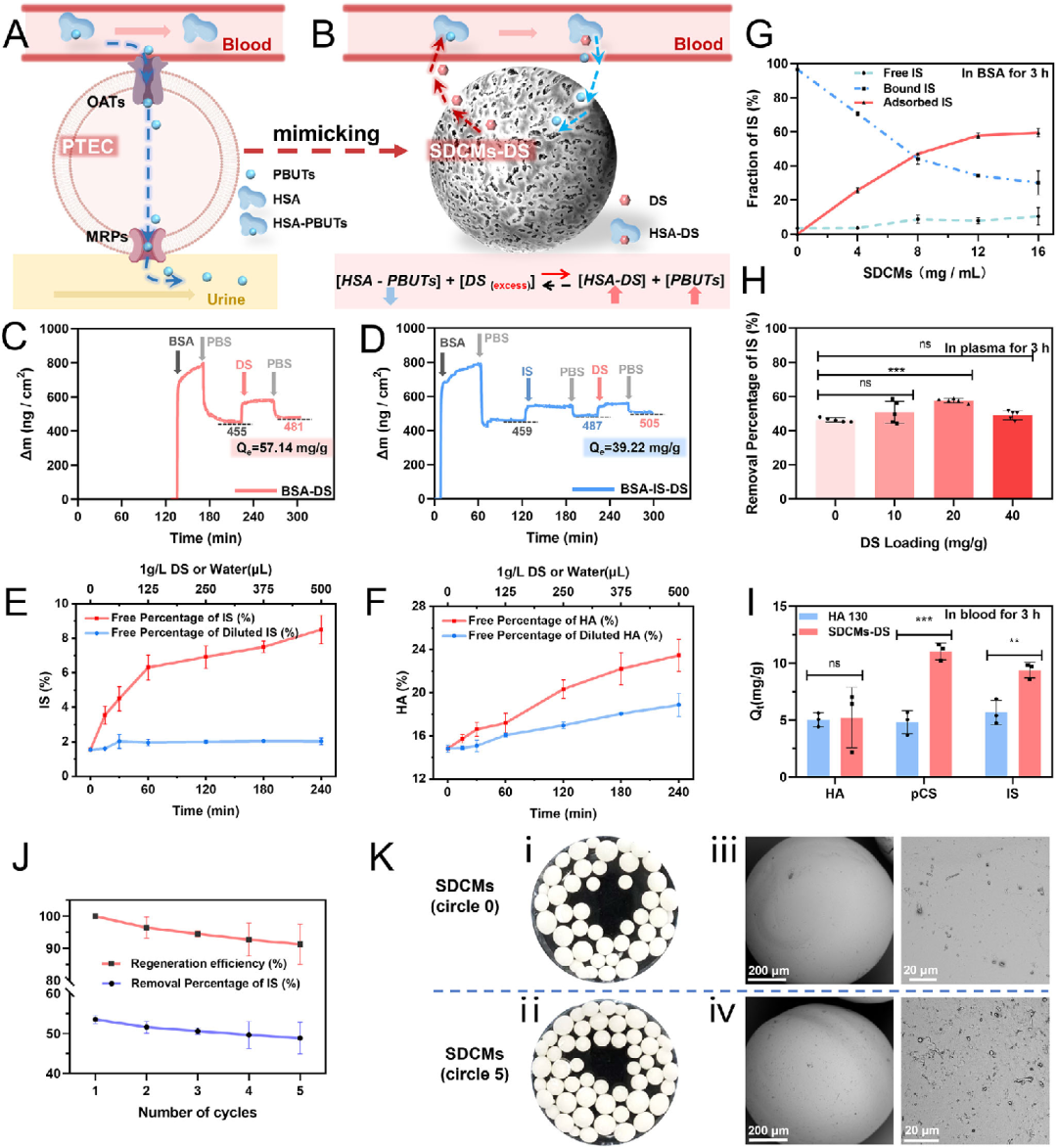
Figure 3
Validation of the binding competitor and in vitro PBUT assays. (A) Schematic illustration of PBUT transport by PTECs. (B) Schematic illustration of PBUT removal by SDCMs–DS. (C) Mass change of BSA upon binding to DS alone. (D) Mass change of BSA upon sequential binding to IS and DS. (E) Time-dependent variation in the percentage of free IS after DS (1 g/L) was continuously added into 2 mL of equilibrated BSA–IS solution (BSA: 50 g/L, IS: 50 mg/L), n = 3. (F) Time-dependent variation in the percentage of free HA after DS (1 g/L) was continuously added into 2 mL of equilibrated BSA–HA solution (BSA: 50 g/L, HA: 125 mg/L), n = 3. (G) Competitive adsorption of IS (40 mg/L) by different doses of SDCMs against BSA in BSA solution (40 g/L), n = 3.
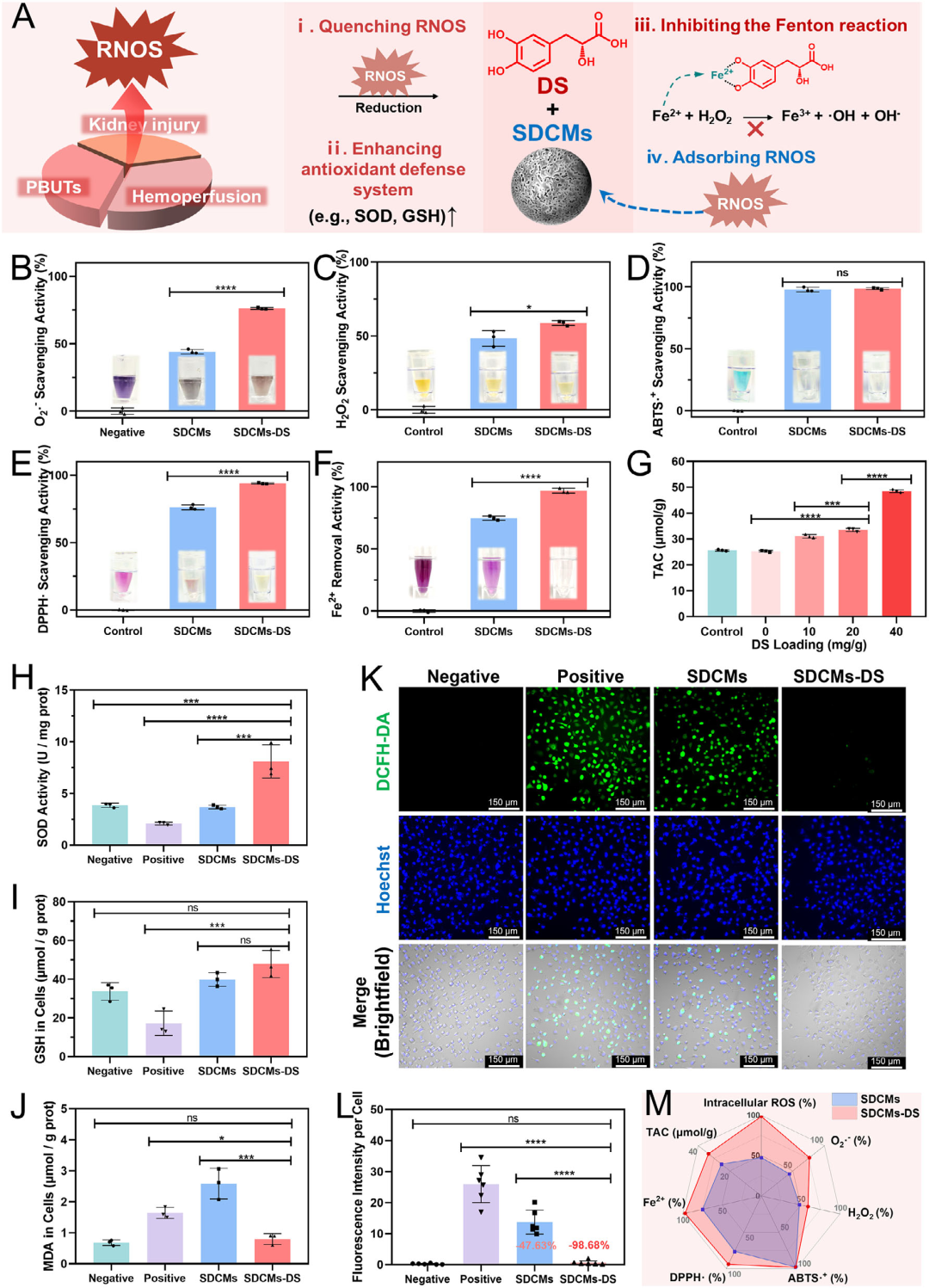
Figure 4
In vitro evaluation of antioxidant capacity. (A) Antioxidant mechanism of SDCMs–DS. (B–E) Scavenging capacities of SDCMs and SDCMs–DS toward RNOS (O₂•⁻, H₂O₂, ABTS•, and DPPH•), n = 3. (F) Fe²⁺ chelating capacity of SDCMs and SDCMs–DS, n = 3. (G) Total antioxidant capacity of microspheres with different DS loading amounts in rabbit plasma (measured by the FRAP assay). The control group was pure plasma, n = 3. (H–J) Statistical analysis of oxidative stress markers (SOD, GSH and MDA) in EA.hy926 cells under different treatments. The negative group was treated without IS and microspheres, and the positive group received IS only, n = 3. (K) ROS staining of EA.hy926 cells under different treatments. (L) Quantitative analysis of fluorescence intensity in panel (K), n = 6. (M) Summary of the distinct antioxidant capacities of SDCMs–DS and SDCMs. A higher value for a given indicator represents stronger antioxidant activity. Note: Data are presented as mean ± standard deviation. Statistical significance was determined by one-way analysis of variance (one-way ANOVA) using GraphPad Prism 8 (ns p > 0.05, * p ≤ 0.05, *** p ≤ 0.001, **** p ≤ 0.0001).
Summary
Protein-bound uremic toxins bind tightly to albumin and are difficult to remove via conventional hemoperfusion, which readily induces oxidative stress and exacerbates kidney injury. Inspired by the physiological functions of proximal tubular epithelial cells, this study loads danshensu onto styrenated β-cyclodextrin cationic microspheres. Danshensu competitively displaces toxins from albumin for subsequent adsorption by the microspheres; meanwhile, it synergistically scavenges reactive oxygen species and suppresses inflammation and apoptosis. In hemoperfusion tests using rabbit models of kidney injury, this system achieves markedly higher clearance rates for hippuric acid, p-cresyl sulfate, and indoxyl sulfate compared with the commercial adsorbent HA130, and retains a regeneration efficiency above 95% after five adsorption cycles.
When designing blood purification materials, it is not necessary to blindly strengthen the matrix affinity to forcibly capture toxins. Introducing small-molecule competitors to disrupt the protein–toxin binding equilibrium can effectively prevent non-specific albumin loss. Moreover, natural small molecules such as danshensu, which possess both competitive binding and free radical-scavenging activity, enable a single component to integrate toxin displacement, surface property modulation, and antioxidant protection without complicated chemical modification. This “competitive dissociation–in situ adsorption–antioxidation” strategy together with the regenerable adsorption–reloading design can be further extended to research on bilirubin removal for liver failure or toxin clearance in sepsis.
References:
DOI: 10.1002/sus2.70090
We specialize in the customization of functional materials for nanomedicine. We can tailor biofunctional nanomaterials according to your experimental requirements, precisely tuning material structure, particle size and surface modification, with full support for characterization assays. Protocols are iteratively optimized with continuous technical communication to support research projects related to targeted delivery, bioimaging, and nanotheranostics. Feel free to share your performance targets for customized solution evaluation.
Mr. Zhang: +86 17715390137
Mr. Chen: +86 18914047343