

 Academic Frontier
Advanced Science | AI-based D-amino acid substitution technology to optimize antimicrobial peptides for treating multidrug-resistant bacterial infections
QQ Academic Group: 1092348845
Detailed
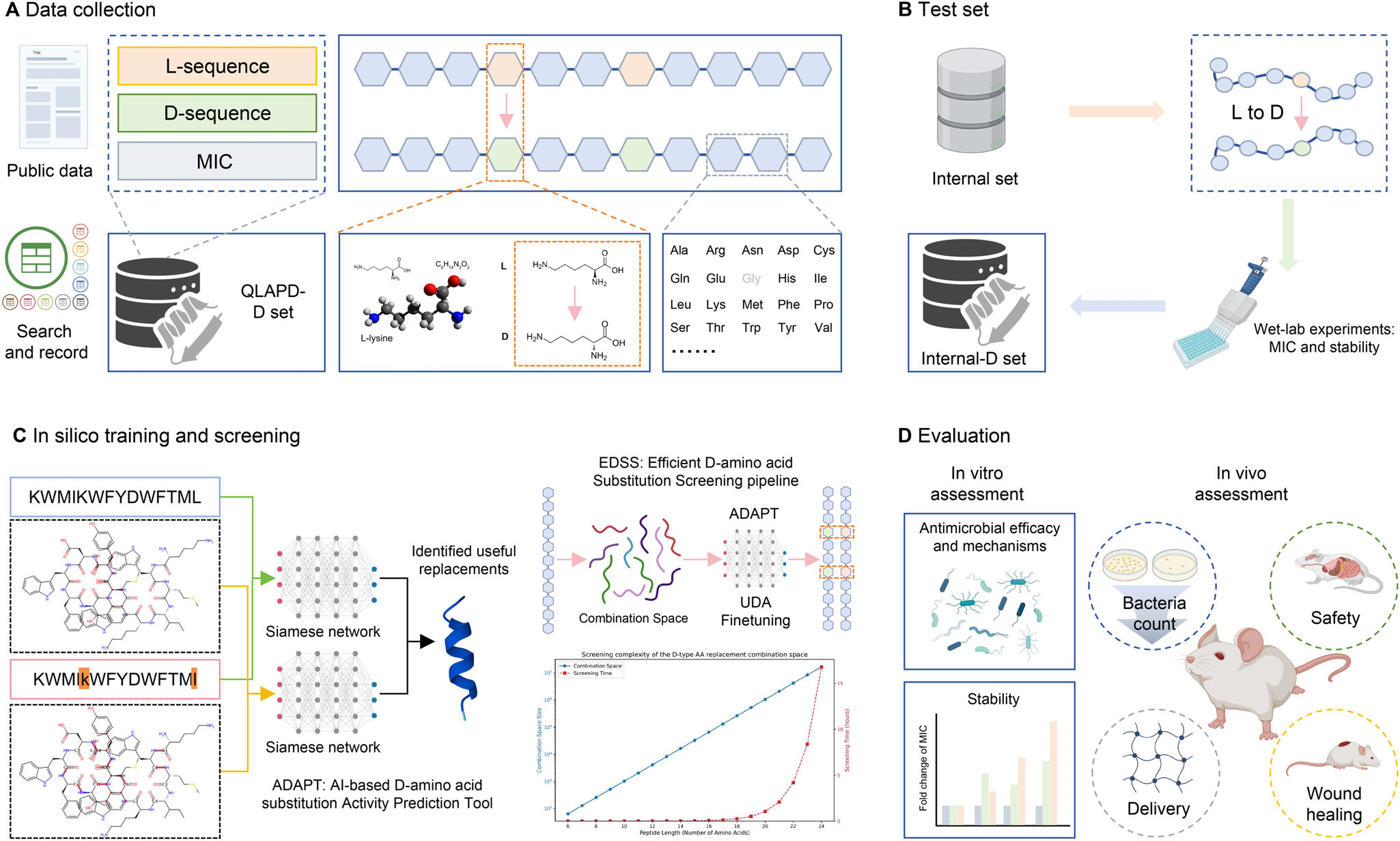
D-amino acid substitution provides an effective strategy for optimizing antimicrobial peptides (AMPs) by enhancing their stability. However, the lack of general rules makes traditional screening methods time-consuming and labor-intensive, potentially leading to reduced or even complete loss of activity. We compiled a dataset of AMPs with D-amino acid substitutions from published literature and databases. Subsequently, we developed ADAPT, an AI-based tool for predicting the functional impact of D-amino acid substitutions.And integrate it into a high-throughput screening pipeline for AMP optimization. Among the variants obtained through this pipeline, 80% exhibited enhanced antibacterial activity. Notably, dR2-1 demonstrated outstanding broad-spectrum antibacterial activity, reduced toxicity, and significantly improved stability. Mechanistic studies confirmed its membrane-targeting antibacterial mechanism. Additionally, we designed a hydrogel delivery system that effectively treated skin infections in mice. Overall, our study established an AI-based framework for D-amino acid substitution in antimicrobial peptides, enabling the efficient discovery of potent and stable candidates with enhanced potential for clinical translation.
References:
DOI: 10.1002/advs.202518522
- Previous: ACS Nano | Cell-Nanopa
- Next: Bioactive Materials|离子


