已传文件:photo/1769388519.png
Chemotherapy kinetic therapy and sonodynamic therapy are two promising strategies for cancer treatment. However, the lack of efficient sonosensitizers and control over chemokinetic therapy limits their application. We synthesized quantum dots of silver-doped zinc selenide with atomically distributed surface iron and demonstrated their effectiveness as sonosensitizers, catalysts, and immunological agents. Surface modification using in situ self-assembling peptides can promote accumulation in tumors.The surface FeIII remains stable and only converts to FeII under ultrasonic treatment, returning to FeIII once the ultrasound stops. Under ultrasonic stimulation, the surface Fe undergoes valence changes, accompanied by the improvement of the hypoxic tumor microenvironment and the generation of beneficial hydroxyl radicals for sonodynamic therapy. In addition, silver doping inhibits non-radiative recombination of excitons, thereby enhancing singlet oxygen production. Meanwhile, selenium promotes a strong systemic immune response to suppress tumor metastasis. This nanoplatform can control the valence exchange of atomically dispersed catalysts and serves as an effective tool for chemo-dynamics/sonodynamics/immunotherapy.
In the field of tumor treatment, chemodynamic therapy and sonodynamic therapy are two promising strategies. However, traditional sonosensitizers have low efficiency, and chemodynamic processes are difficult to control precisely, limiting their practical application. Features of the tumor microenvironment, such as high hydrogen peroxide concentration and hypoxia, provide conditions for catalytic therapy but also often make tumor cells resistant to radiotherapy, chemotherapy, and other treatments.Single-atom catalysts have attracted attention in enzyme-mimicking catalytic therapy due to their extremely high atomic utilization, especially iron-based catalysts that can efficiently catalyze Fenton reactions. However, they may also cause non-specific toxicity in normal tissues due to the presence of hydrogen peroxide.
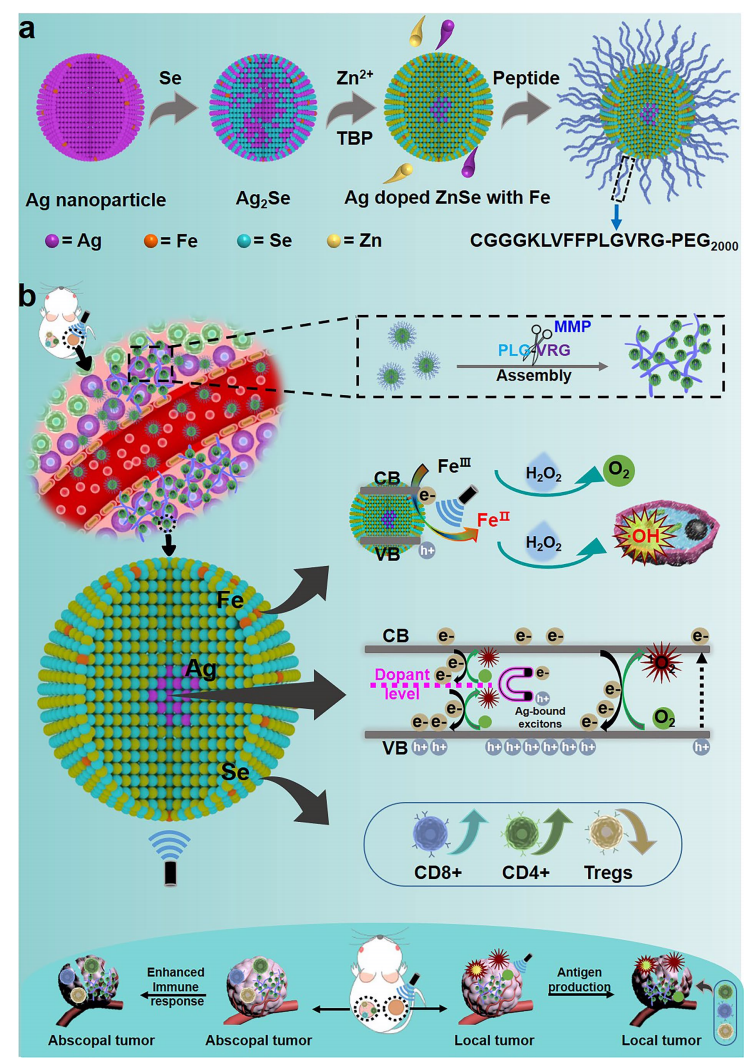
This study cleverly integrates multiple strategies, including atomically dispersed catalysis, ultrasound external field control, enzyme-responsive self-assembly, and elemental immune modulation, to create an intelligent and efficient multifunctional nanotherapeutic platform.It not only addresses the issues of low efficiency and uncontrollable catalytic reactions in traditional photosensitizers, but also provides a new approach to combating tumor metastasis by activating anti-tumor immunity. This work lays an important material and technical foundation for the development of the next generation of precise and synergistic cancer therapies.
Reference News:
DOI: 10.1038/s41565-025-01943-y